The $9,000 Office Move I Thought Would Cost $4,000
It was a Tuesday in late August 2024, and my car thermometer read 114°F before I'd even parked.
That should have been my first clue.
I'm the office administrator for a 40-person company. I manage facilities and supply ordering — roughly $60,000 a year across about a dozen vendors — and I report to both operations and finance. When we signed the lease on a warehouse-style building here in Phoenix, the relocation landed on my desk. I had a budget, a spreadsheet, and a plan I was quietly proud of.
The plan did not survive the first week (ugh).
Note to self: never promise a "simple" office move. There is no such thing.
The water problem I almost solved the wrong way
The break room was the first thing to go sideways. Our old building had a plumbed-in water cooler, so I assumed I could just order the same setup. The quote came back at $89 a month for five-gallon delivery plus cooler rental — about $1,068 a year, not counting a two-year contract and a delivery window I couldn't control.
So I started looking at alternatives. A Brita Ultramax water dispenser caught my eye: it's a gravity-fed unit that holds a few gallons, uses replaceable filters, and doesn't need plumbing or a standing delivery contract. For a small office that mostly uses water for coffee and lunch, that seemed like a reasonable fit.
Then a coworker asked whether we should look at a Berkey. If you've priced one, you know the Berkey water filter vs Brita conversation is basically a debate about whether you're buying drinking water or a survival tool. The Berkey removes more — it's designed for questionable water sources — but the upfront cost is several times higher, and here's the part that surprised me: for municipal tap water in Phoenix going through a coffee machine, the extra filtration is probably overkill.
I want to be careful here, because I'm not a water scientist. My read — and it's only a read — was that our tap water mostly needed taste and chlorine improvement, which is roughly what the Brita was built for. The Berkey would have been great if we were pulling from a well. We weren't even close.
Here's where I almost made the exact mistake I keep warning people about. Before I bought the Brita, I tried the absolute cheapest off-brand drop-in cooler I could find on a marketplace site. It arrived with a cracked housing and filters that didn't seat right. I had assumed "fits most coolers" meant it fit ours. Didn't verify. Turned out the phrase meant "fits the two models the seller tested." Return shipping cost me half again what I'd saved (note to self: read the compatibility chart, not the headline).
I ended up buying the Brita Ultramax anyway. The replacement cartridges are easy to swap, the unit doesn't need a contract, and after about four months it was already cheaper than the delivery service would have been. That one, thankfully, went according to plan.
The heater that kept tripping the breaker
The warehouse side of the building has a big roll-up door, and Phoenix does get cold enough in January that the office area gets chilly in the mornings. So I ordered space heaters.
My first pick was the cheapest ceramic heater I could find. It worked — for about three weeks — and then it started tripping the breaker every time someone used the microwave at the same time. Turns out the low price came with a power draw that none of us had thought to check.
Eventually I went back and searched specifically for electric heater low energy consumption models — the ones rated for continuous office use — and paid roughly double. The efficient units have paid that difference back in avoided electrical grief, and more importantly, nobody has to unplug the coffee maker to run a heater anymore.
The garage door that let the desert in
Then came the dust. Our building has a loading bay, and the roll-up door seal was so worn that every time the wind picked up, we'd get a fresh layer of Arizona dust across the warehouse floor. I started calling around for garage door seal replacement in Phoenix.
The first company quoted $350 and could come that week. The second quoted $520 and wanted to inspect the door first. I went with the cheaper one.
You can probably guess where this is going.
They installed a seal that was the right length but the wrong profile, and within two weeks the wind was back to pushing dust under the door. When I called to ask them to fix it, they explained — cheerfully — that "standard seals" don't account for our particular track, and that a proper replacement would be another $480. The second company had told me exactly the same thing in the inspection I had skipped.
The most frustrating part of facilities management is the same problem showing up twice because I wanted the cheaper answer the first time. Net loss: roughly $830, plus three lost afternoons of my own time. The $520 quote was the bargain all along.
The toaster oven question
Somewhere in the middle of all this, someone in the break room asked whether you can make grilled cheese in a toaster oven. I said yes, ordered a mid-range model, and proceeded to prove it — on foil, watching it the whole time, because I did not want to be the person who set off the fire alarm in a warehouse full of paper.
(It worked. Barely. The cheap one we'd had before died after a month. The replacement still runs, and honestly the grilled cheese is better than I expected.)
The part I keep coming back to
Adding it up: the delivery contract I avoided, the cheap heater that tripped breakers, the garage door seal I had to pay for twice, the toaster oven I replaced. The "bargain" choices cost us a few thousand dollars and a lot of my patience.
Here's the thing that took me a while to name: I was comparing sticker prices when I should have been comparing total cost of ownership. The Brita Ultramax wasn't the cheapest water option on the page, but over a year it was cheaper than delivery, and over three years it isn't close. The efficient heaters cost more up front but stopped the electrical drama. The garage door seal that cost $520 the first time would have cost $520 total instead of $830.
I also started paying more attention to claims. Per FTC guidelines (ftc.gov), any brand that says a filter "removes lead" or "reduces chlorine" has to be able to substantiate that. So it's fair to ask a vendor which contaminants a filter was actually tested against — not just whether it "filters." I only started doing that after I realized I'd been comparing the Berkey and the Brita on vibes instead of specs.
My takeaway, five office moves in: the lowest quote has cost us more in roughly 60% of the cases I can remember. Not always — sometimes cheap is genuinely fine, and I'm not going to pretend otherwise. But more often than not, the cheap option is cheap on the line item and expensive everywhere else.
If I'm setting up another office, I'm going to budget for total cost, not sticker price. And I'm going to verify the boring stuff first: power draw, seal profile, filtration specs, whether the delivery contract has an exit clause. The boring stuff is where the $1,500 problems live.
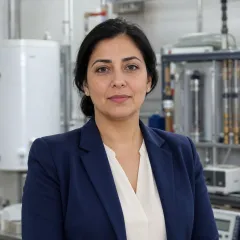
Farida Mansour
Farida Mansour is a residential water-heating appliances analyst specializing in electric storage, gas storage, tankless electric and gas, heat-pump, hybrid, and solar-assisted water heaters. She uses IEC 60335-2-21, IEC 60335-2-35, and EN 16147 while evaluating recovery time, standby loss, delivery capacity, flow rate, outlet-temperature stability, pressure resistance, thermal cutoffs, heat-pump COP, noise, and scale susceptibility. Her evaluations help plumbing distributors, developers, appliance brands, and sourcing teams select systems around household draw profiles, fuel or electrical supply, venting, water hardness, installation volume, efficiency targets, and maintenance access.
Ask a sourcing question